
History's Cast
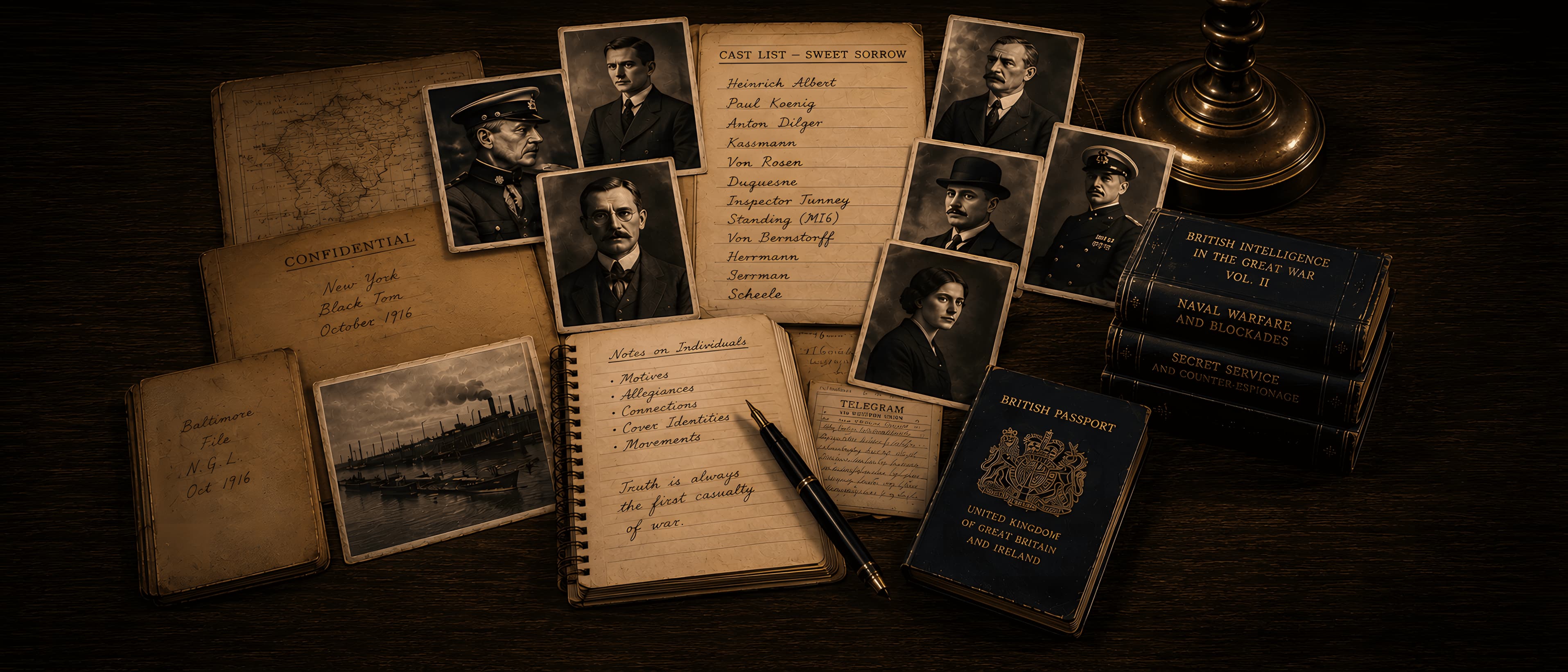
One of the pleasures — and occasional hazards — of writing historical fiction is discovering that the real people are frequently more extraordinary than anyone one might reasonably invent. Sweet Sorrow contains a considerable cast of historical characters: diplomats, policemen, spies, saboteurs, businessmen, scientists and, in one case, the captain of a commercial submarine.
These are some of the people whose real lives lie behind the novel.
The Hunters
Thomas J. Tunney
Thomas Joseph Tunney was the head of the New York Police Department's Bomb Squad and became one of the most persistent opponents of German sabotage in the United States.
That description perhaps makes him sound rather more conventional than he was. Before the United States entered the war, the Federal Government possessed neither the organisation nor, in many cases, the legal powers necessary to deal effectively with foreign espionage and sabotage. Much of the actual detective work therefore fell to Tunney and his New York policemen.
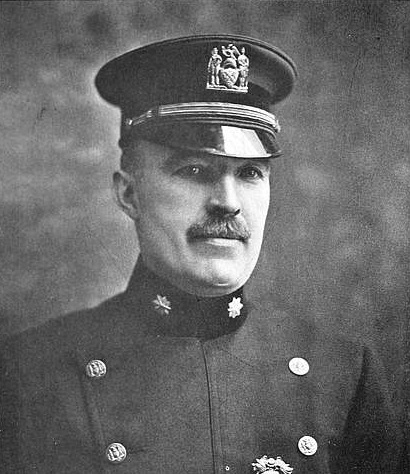
Tunney's investigations gradually took him from bombs and suspicious fires to something considerably more sinister: reports that German agents were attempting to infect the horses and mules being shipped from American ports to the Allied armies. His decision to increase security around the New York horse corrals helped bring the work of Anton Dilger and his associates to an end.
Tunney set his wartime activities down in his book, snappily entitled, "Throttled! The Detection of the German and Anarchist Bomb Plotters". You can read it immediately here free of charge thanks to Project Gutenberg.
The Embassy
Count Johann Heinrich von Bernstorff
Count Johann Heinrich von Bernstorff was the German Ambassador to the
United States and therefore occupied an unenviable position. He was
expected to defend German interests in a
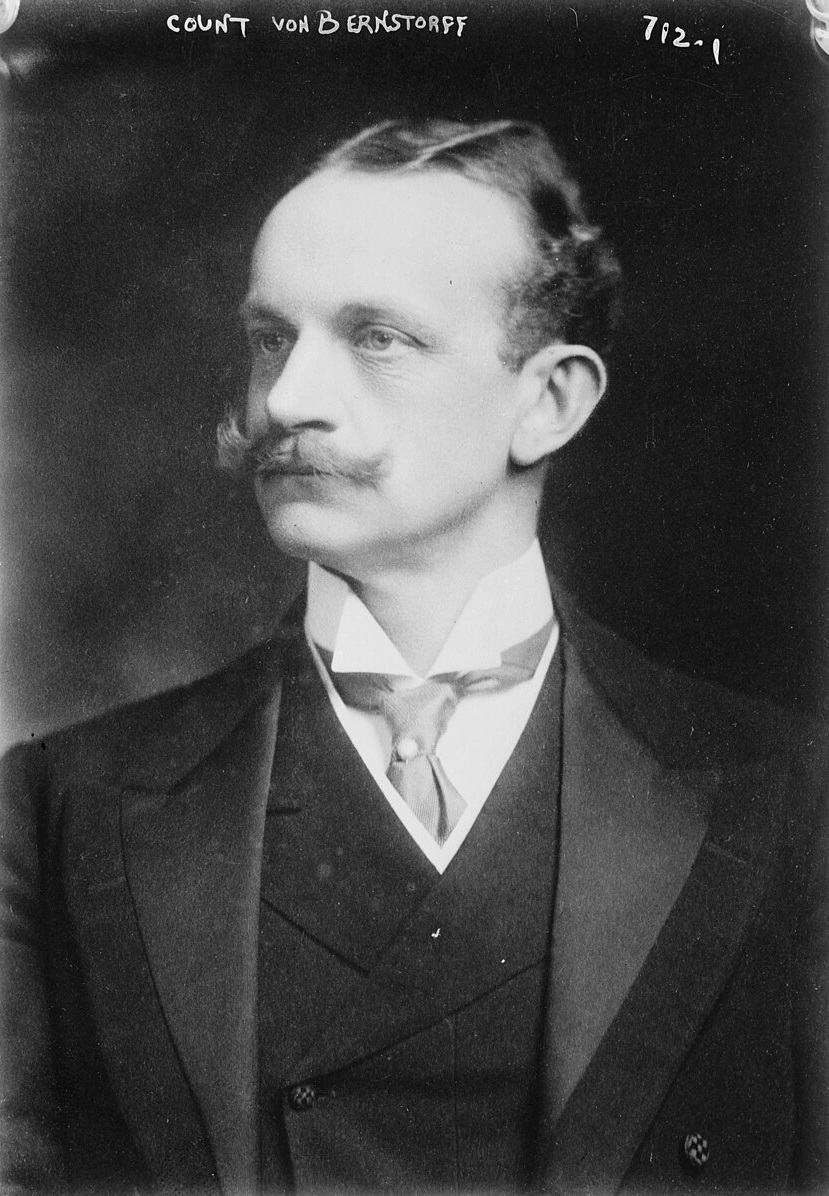
Beneath the respectable diplomatic structure of his embassy operated men engaged in intelligence gathering, propaganda and sabotage. Yet Bernstorff himself was a more complicated figure than the archetypal sinister ambassador. He understood the danger of driving the United States into the war and later opposed unrestricted submarine warfare for precisely that reason.
The Germany represented by Bernstorff therefore contained something of the central contradiction of the period: diplomats desperately trying to preserve American neutrality while other branches of the German state were conducting clandestine operations on American soil.

To gain an understanding of the sheer magnitude of Germany's clandestine activities against the USA, I can recommend Jones and Hollister's book of the period, "The German Secret Service in America 1914-1918". Click on the image to read the book, courtesy of Project Gutenberg.
Franz von Papen
Franz von Papen was the German Military Attaché in Washington and one of the principal organisers of German clandestine activity in the United States. From New York he developed what he himself referred to as his "War Office": a network of agents, sympathisers, businessmen and specialists capable of interfering with the enormous flow of Allied war material across the Atlantic.
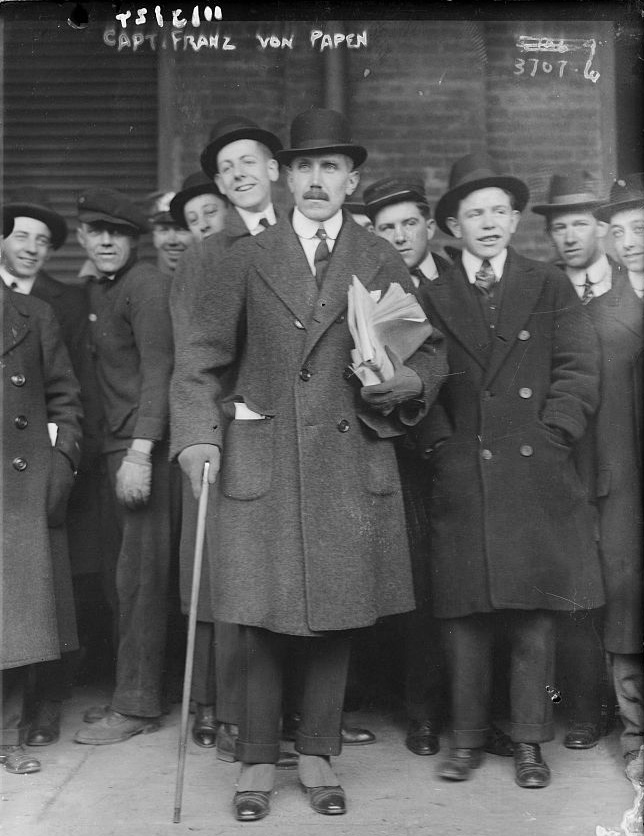
His American career ended when the United States Government declared him persona non grata and he returned to Germany at the end of 1915. That, however, was very far from the end of Franz von Papen.
His subsequent political career was remarkable. He became Chancellor of Germany in 1932 and, believing that Adolf Hitler could be controlled by conservative politicians, played an important part in the manoeuvring which brought Hitler to the Chancellorship in January 1933.
History occasionally provides its own rather alarming sequels.
Karl Boy-Ed
Captain Karl Boy-Ed was Germany's Naval Attaché in the United States. If von Papen represented German military interests ashore, Boy-Ed was concerned particularly with naval intelligence and the maritime war.

His position inevitably brought him into the world of shipping companies, interned German vessels, American ports and the increasingly important traffic carrying supplies to Britain and France. Like von Papen, his activities eventually exhausted American patience, and the United States requested his recall in 1915.
Heinrich Albert
Dr Heinrich Albert was the German Commercial Attaché and one of
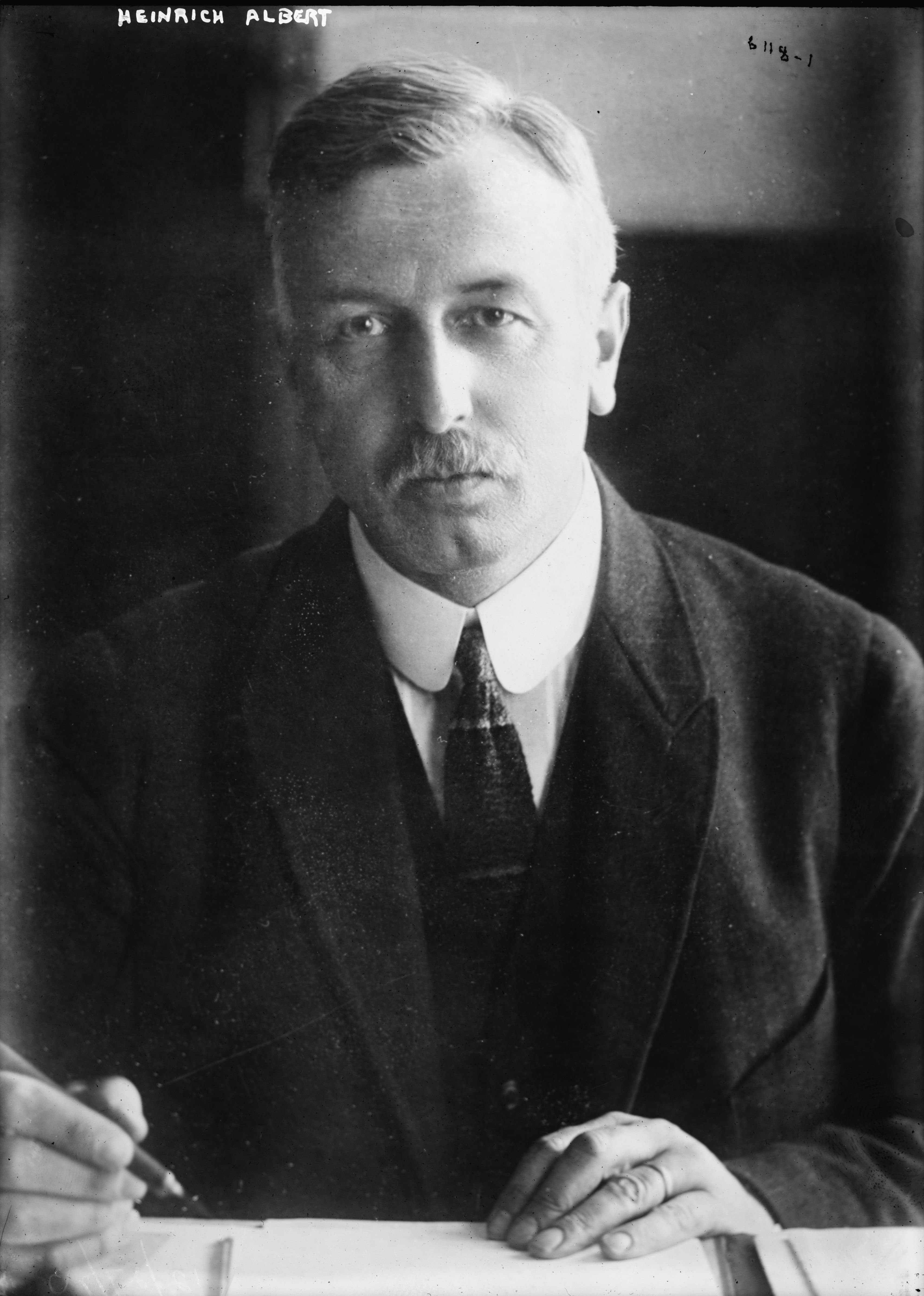
In 1915 Albert left a briefcase on a New York elevated train. It contained documents concerning German propaganda and clandestine activities. The briefcase was acquired by an intelligence agent and its contents eventually became extremely embarrassing to the German Government.
Losing secret papers on public transport is therefore by no means a modern invention.
The Operators
Paul Koenig
Paul Koenig — without the umlaut normally used by the other
König on this page — was associated with the
Hamburg-America Line and ran what was ostensibly a private detective
organisation in
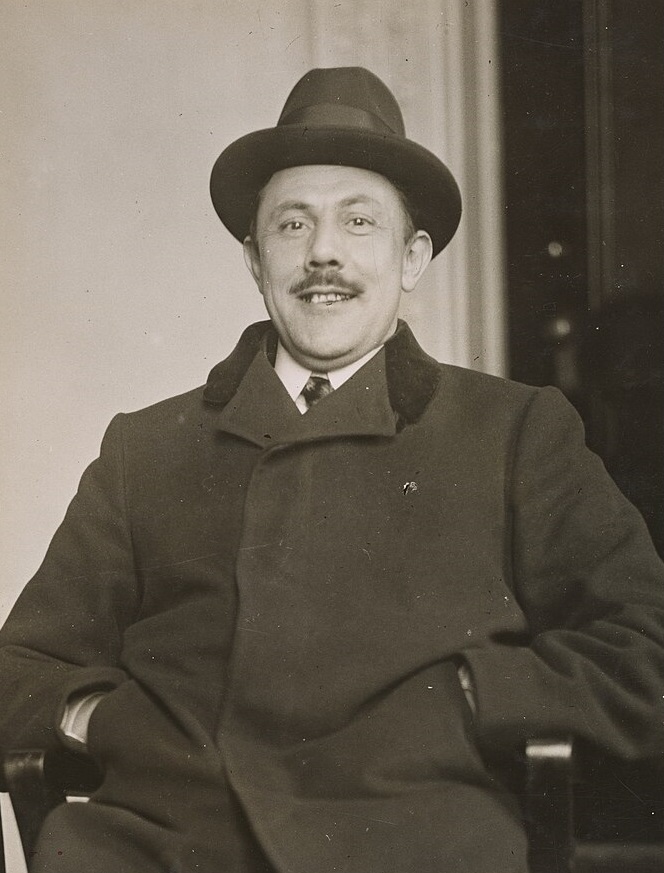
Von Papen recognised its usefulness. Koenig recruited and supervised agents, developed elaborate methods of arranging clandestine meetings, watched docks and shipping, and became one of the most important operational figures in the German network.
His activities eventually attracted the attention of Thomas Tunney's Bomb Squad. By the beginning of 1916 Koenig knew that the police were asking questions about attempts to poison horses waiting for shipment to Europe. That warning travelled through the German network and helped precipitate Anton Dilger's departure from America.
Wolf von Igel
Wolf von Igel was one of von Papen's assistants and another important link between the diplomatic establishment and the men carrying out clandestine operations.

His name appears in connection with several German schemes, including the proposed attack on the Welland Canal and aspects of the sabotage organisation associated with Walter Scheele.
In April 1916 American agents raided von Igel's New York office. The papers they seized provided an extraordinary glimpse into German secret activity in North America — and into Germany's contacts with Irish nationalists at a particularly sensitive moment in Irish history.
Paul Hilken
Paul Hilken was a Baltimore businessman associated with the North German Lloyd steamship company. Behind that perfectly respectable occupation lay a much less conventional role.
Hilken acted as an organiser and paymaster for German clandestine operations centred on Baltimore. Money which supported Anton Dilger's biological laboratory in Chevy Chase passed through this network.

He was also one of the men who realised that Thomas Tunney's police were getting dangerously close to the biological sabotage operation.
Frederick Hinsch
Captain Frederick Hinsch was another important member of the Baltimore organisation. Working through the maritime community, he could draw upon German sailors, dock workers and sympathisers for sabotage operations.
Hinsch became the practical link between Anton Dilger's laboratory and the ports. Cultures produced at Chevy Chase could be collected and passed to agents who attempted to infect horses and mules awaiting shipment to Europe.
It is an important reminder that Dilger was not simply a solitary scientist conducting bizarre experiments in a suburban basement. There was an organisation around him capable of turning those experiments into an operation.
The Specialists
Dr Walter T. Scheele
Walter Scheele was a German chemist whose particular contribution to the clandestine war was directed principally against shipping.
Scheele became associated with the manufacture of delayed incendiary devices — the notorious "cigar" or "pencil" bombs — which could be concealed aboard ships carrying supplies to the Allies. The intention was simple and ingenious: a fire might begin only after the vessel was at sea, making both detection and investigation considerably more difficult.
His work was connected with the network surrounding the interned German liners at Hoboken, where ships and skilled German crews provided both facilities and manpower for clandestine activity.
Dr Anton Dilger
Anton Casimir Dilger must rank among the strangest characters to emerge from the secret war in America.
He was born in Virginia in 1884, the son of Hubert Dilger, a German immigrant who had fought with distinction for the Union during the American Civil War and received the Medal of Honor for his actions at Chancellorsville.
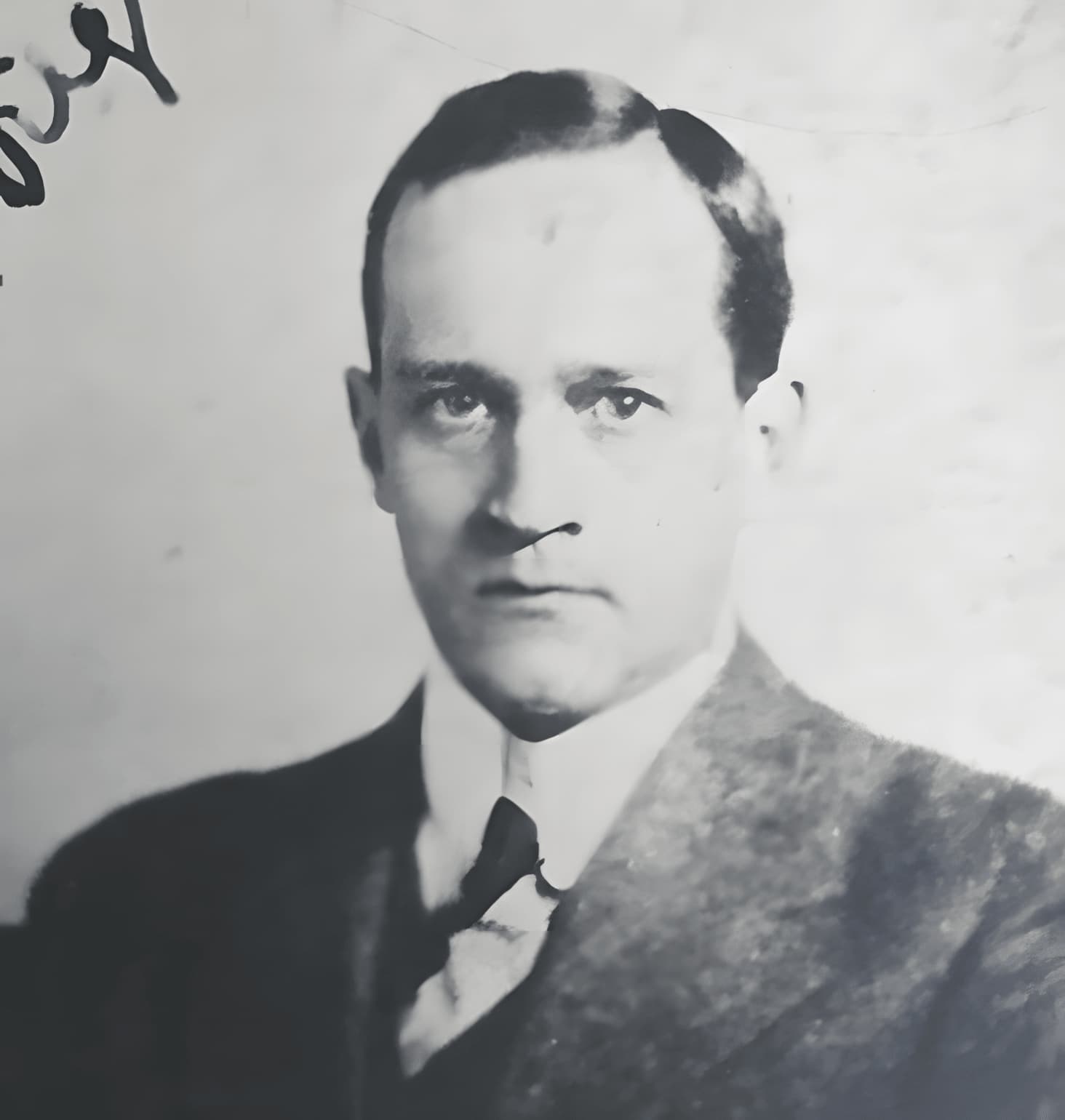
Anton was sent to Germany as a boy, was educated there and became a physician and bacteriologist. He therefore possessed precisely the scientific expertise the German authorities needed when earlier attempts to use disease against Allied livestock proved unreliable.
In an unremarkable house near Chevy Chase Circle, Dilger and his brother established the clandestine laboratory later known as Tony's Lab. There they cultivated anthrax and glanders for use against the thousands of American horses and mules being shipped to the Allied armies.
The contrast remains extraordinary: one of the earliest organised biological sabotage operations of the twentieth century was conducted not inside some remote military establishment, but in an ordinary American suburban house.
Dilger survived the war almost to its conclusion. He died in Madrid in October 1918, officially from influenza. There were later suggestions that intelligence agents might have had other reasons for wanting him dead.
Baron Otto von Rosen
Baron Otto von Rosen was a Swedish nobleman whose involvement with Finnish independence brought him into the shadowy world of German clandestine operations against Imperial Russia.

In January 1917 Norwegian authorities arrested von Rosen and his companions at Karasjok in the far north of Norway. Their luggage proved considerably more interesting than might normally be expected of travellers in Finnmark. It included maps, explosives, curare and some apparently innocuous lumps of sugar.
The sugar was anything but innocuous. Concealed within some of the lumps were tiny glass containers associated with anthrax intended for biological sabotage against animals supporting Russian military operations.
Remarkably, examples survived for decades in a Norwegian police museum. When they were rediscovered and examined scientifically towards the end of the twentieth century, evidence of Bacillus anthracis was still detectable.
Von Rosen therefore provides one of the more extraordinary reminders that some of the apparently improbable events surrounding Sweet Sorrow are not inventions at all.
Peter Strasser
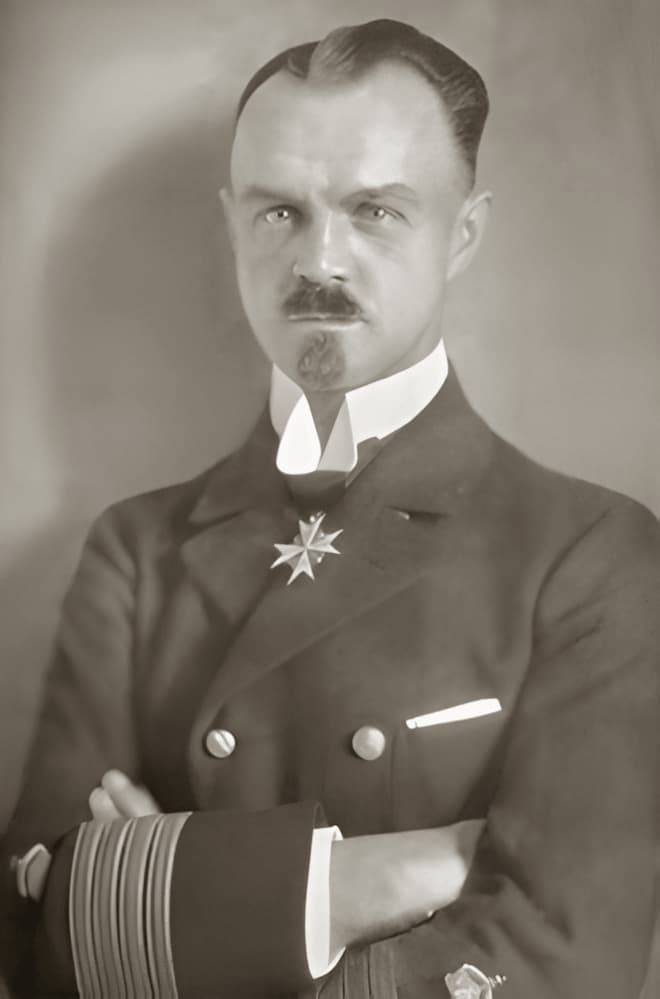
Peter Strasser was the commanding officer of the Imperial German Navy's airship service and one of the most determined advocates of the Zeppelin as an offensive weapon.
Strasser believed that war could no longer be confined to armies fighting one another at the front. Britain's factories, transport system and industrial population were all sustaining the Allied war effort and were therefore, in his view, legitimate targets.
There was also a strategic argument behind the brutality. Strasser believed that sustained attacks upon Britain could damage civilian morale, disrupt industry and force the British Government to reconsider continuing the war. Even as increasingly effective British defences made Zeppelin operations extraordinarily dangerous, he continued to argue strongly for the airship offensive.
That philosophy gives Strasser a particularly important role in Sweet Sorrow. The novel takes the documented German biological sabotage programme one disturbing step further and asks what might have happened had the men capable of conducting unconventional warfare been brought together with the men who possessed a means of delivering their products over London.
The argument put forward in the novel is deliberately uncomfortable: if a sufficiently terrifying attack could force Britain to capitulate and thereby shorten the war, might those responsible persuade themselves that an atrocity would ultimately save lives?
Heinrich Mathy
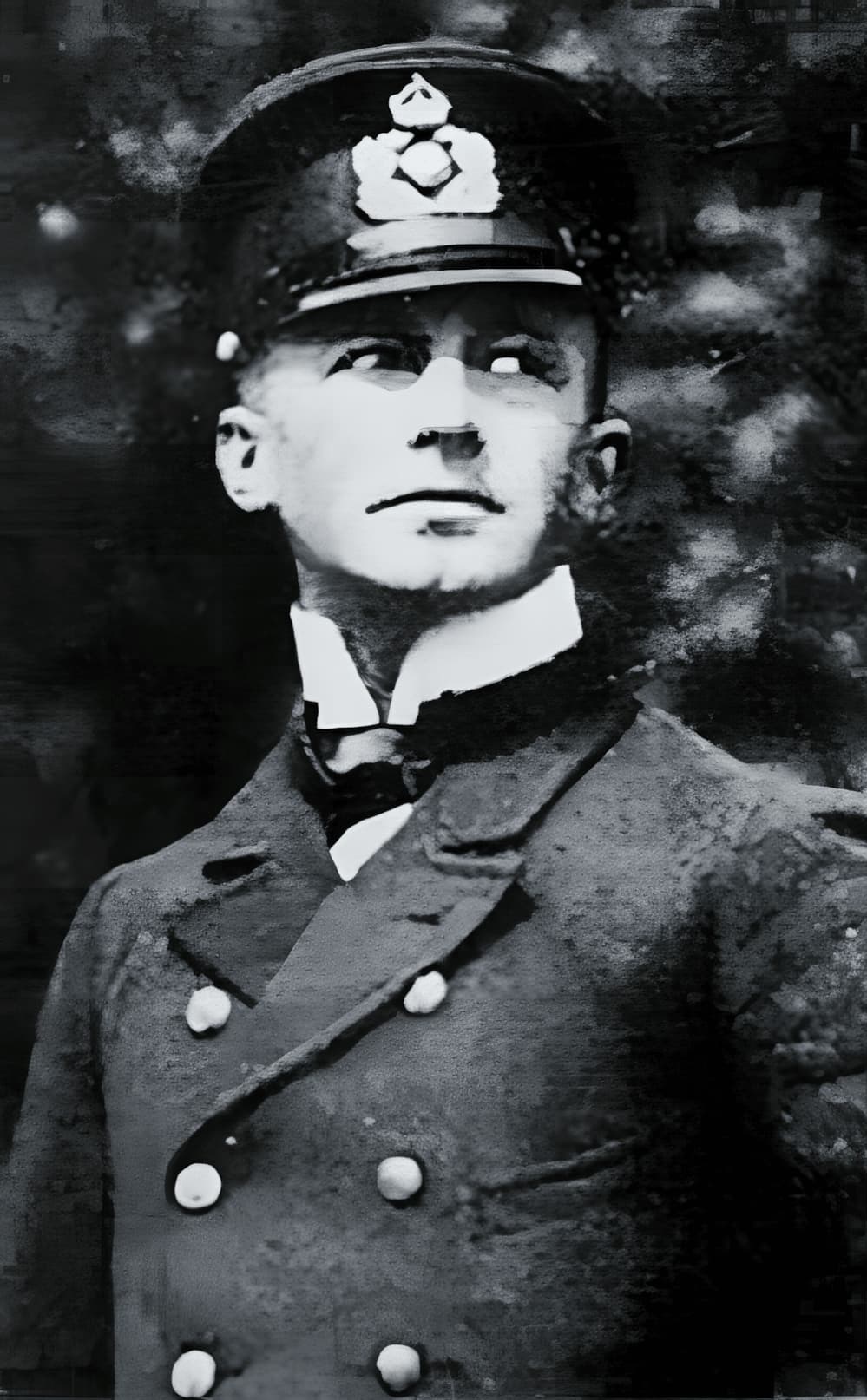
Heinrich Mathy was one of the most successful and audacious commanders of the Imperial German Navy's Zeppelin force. Under Peter Strasser's command he became one of the leading practitioners of the new and deeply controversial business of strategic bombing.
Mathy led repeated raids against Britain and became particularly associated with attacks on London. By 1916 his name was sufficiently well known for him to have acquired something approaching celebrity status in Germany — and notoriety in Britain.
On the night of 1 October 1916 Mathy commanded the Zeppelin L31 on another raid over England. The airship was intercepted north of London by Second Lieutenant Wulstan Tempest and set ablaze. It crashed near Potters Bar with the loss of Mathy and his entire crew.
Mathy's appearance in Sweet Sorrow places a real and highly experienced Zeppelin commander alongside the men directing Germany's increasingly unconventional war against Britain. As elsewhere on this page, exactly what happens after that belongs to the novel.
Gustav Steinhauer
Gustav Steinhauer was one of the more colourful figures in German intelligence and, like several members of the cast of Sweet Sorrow, subsequently contributed considerably to his own legend.

A former Berlin police detective who had trained with the Pinkerton Detective Agency in the United States, Steinhauer spoke fluent English and became closely associated with Kaiser Wilhelm II. He accompanied the Kaiser to Britain at the time of Queen Victoria's death and even worked alongside the British detective and intelligence officer William Melville.
Steinhauer subsequently became head of the British section of the German Admiralty's intelligence service. In the years before the First World War he organised agents in Britain, with particular interest in the Royal Navy, its dockyards and bases.
British counter-intelligence became remarkably familiar with his organisation. Correspondence between Steinhauer and his agents was intercepted, allowing the British to build up a picture of the German espionage network before war was declared.
After the war Steinhauer published his own account under the wonderfully modest title Steinhauer: The Kaiser's Master Spy. Like most intelligence memoirs, it is best read with a certain degree of caution. Possibly associated with this florid exaggeration, it is extrememly difficult to source an image of the man himself.
In Sweet Sorrow it is Steinhauer's position at the intersection of German naval intelligence and the clandestine war against Britain that matters. Beyond that, saying too much would rather spoil the story.
The Man from Germany
Captain Paul König
Paul König should not be confused with Paul Koenig, the German agent operating in New York. The similarity of their names is one of those small gifts history gives to anyone attempting to keep its cast straight.
König was a merchant seaman and the captain of the remarkable German commercial submarine Deutschland.
The Deutschland was built not primarily as a warship but as a blockade-running merchant vessel. In 1916 she crossed the Atlantic carrying valuable cargo between Germany and the still-neutral United States, demonstrating that the British blockade could, at least in spectacular individual cases, be penetrated beneath the sea.

Her arrival in Baltimore caused a sensation. König became something of a celebrity, entertained by civic dignitaries and pursued by newspapermen before taking his extraordinary vessel back across the Atlantic.
The commercial submarine and her captain provide one of the more improbable pieces of genuine history used in Sweet Sorrow. And you can read K&oml;nig's own recollections in his book, "The Voyage of the Deutschland". Click on the image to read the book, courtesy of Wikimedia.
The Dark Invader
Franz von Rintelen
Franz von Rintelen was a German naval officer sent to the United States in 1915 with money, imagination and a broad instruction to interfere with the supply of American war material to the Allies.
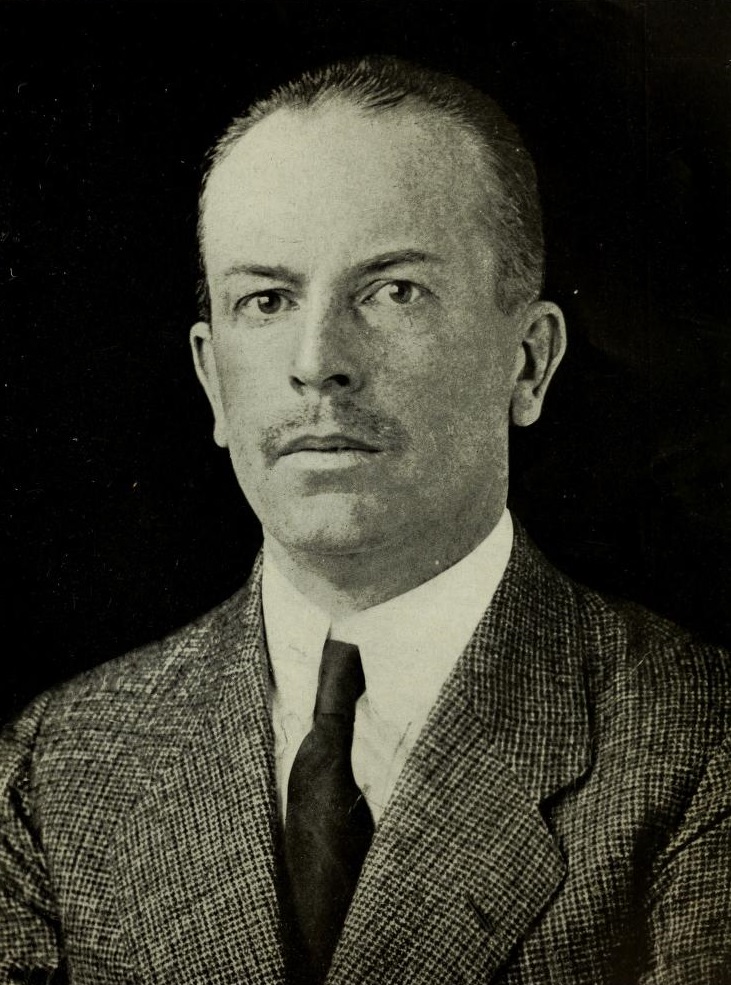
He became involved in schemes ranging from labour disruption to maritime sabotage and proved to possess both considerable ability and an equally considerable opinion of himself.
You can find von Rintelen's wartime reminiscences in his book, "The Dark Invader", here free of charge thanks to Project Gutenberg Australia.
I have to say I cannot escape the impression that if he could have gone through life wearing a cape over the lower part of his face, he would have.
But, still, an interesting read and one has to bear in mind the influence of the period on his style — lots of exclamation marks(!). And the foreword to the book by "Blinker" Hall, of Room 40 fame, is very decent.
A Rather Remarkable Foreword
MY DEAR RINTELEN,
I wish to tell you to-day that I, as you know, have the greatest sympathy for you. I know well that you have suffered more than a man should be called on to suffer, and I am full of admiration for the manner in which you have retained your balance of mind and your courage.
That the fortune of war made it my job to bring so many disasters on you, that is my sorrow, and if by anything I can do I can in some manner assist to get you peace and happiness, I shall feel happy myself.
Sincerely yours,
W. R. HALL.
The British Connection
Guy Standing
Guy Standing is perhaps the member of the cast of Sweet Sorrow whom readers are most likely to assume I invented.
I didn't.
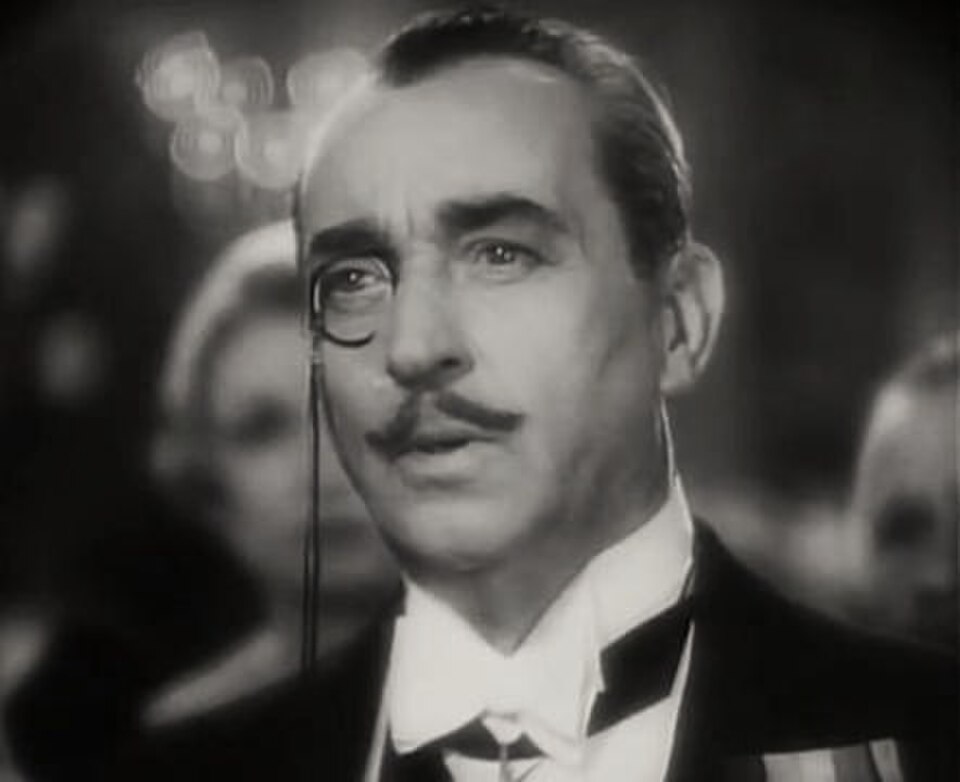
Standing was a successful English actor who had spent much of his professional life on the American stage. He therefore knew the United States extremely well and possessed the rather useful ability to move comfortably through a world of theatres, hotels, society and public performance.
During the First World War he served in the Royal Naval Volunteer Reserve, eventually reaching the rank of Commander, and was seconded to the British Secret Intelligence Service. Later in the war he transferred to the Ministry of Information and in 1918 served with the British War Mission in the United States.
His wartime service brought him a CBE in 1918 and a knighthood, as KBE, in the 1919 New Year Honours.
After the war Standing returned to acting and eventually became a familiar Hollywood character actor. Acting was very much the family business: his father Herbert and several of his brothers were actors, his daughter was the actress Kay Hammond, and his grandson is the actor Sir John Standing.
I have taken some liberties with Guy Standing in Sweet Sorrow — not least by shaving a few years from his age — but the apparently improbable central idea is true: the actor really did become an intelligence officer.
Sir William Wiseman
William Wiseman is another of those figures whose real career sounds suspiciously like something invented for a spy novel.
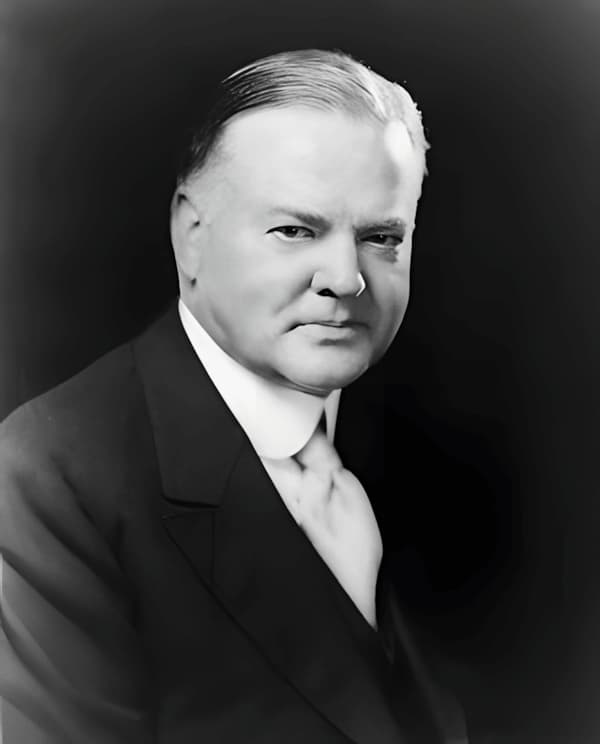
Before the war he had extensive business connections in North America. After being wounded while serving with the British Army, he was recruited by Mansfield Smith-Cumming — the original "C" — and sent to New York to establish an American station for the Secret Intelligence Service.
From there Wiseman built an intelligence organisation concerned with German sabotage and espionage, as well as Irish and Indian nationalist activity in the United States. Norman Thwaites, another former journalist with excellent New York connections, became his deputy.
Wiseman's role eventually went far beyond conventional intelligence work. He developed a remarkably close relationship with Colonel Edward House, President Woodrow Wilson's confidant, and gained direct access to Wilson himself. By the later stages of the war he had become an important unofficial channel of communication between the British and American governments.
For the purposes of Sweet Sorrow, however, it is the earlier Wiseman who matters: the man quietly establishing a British intelligence organisation in a country which was still officially neutral.
Admiral Sir Reginald "Blinker" Hall
Admiral Sir Reginald Hall was Director of British Naval Intelligence for most of the First World War and one of the most formidable figures in Britain's wartime intelligence organisation.
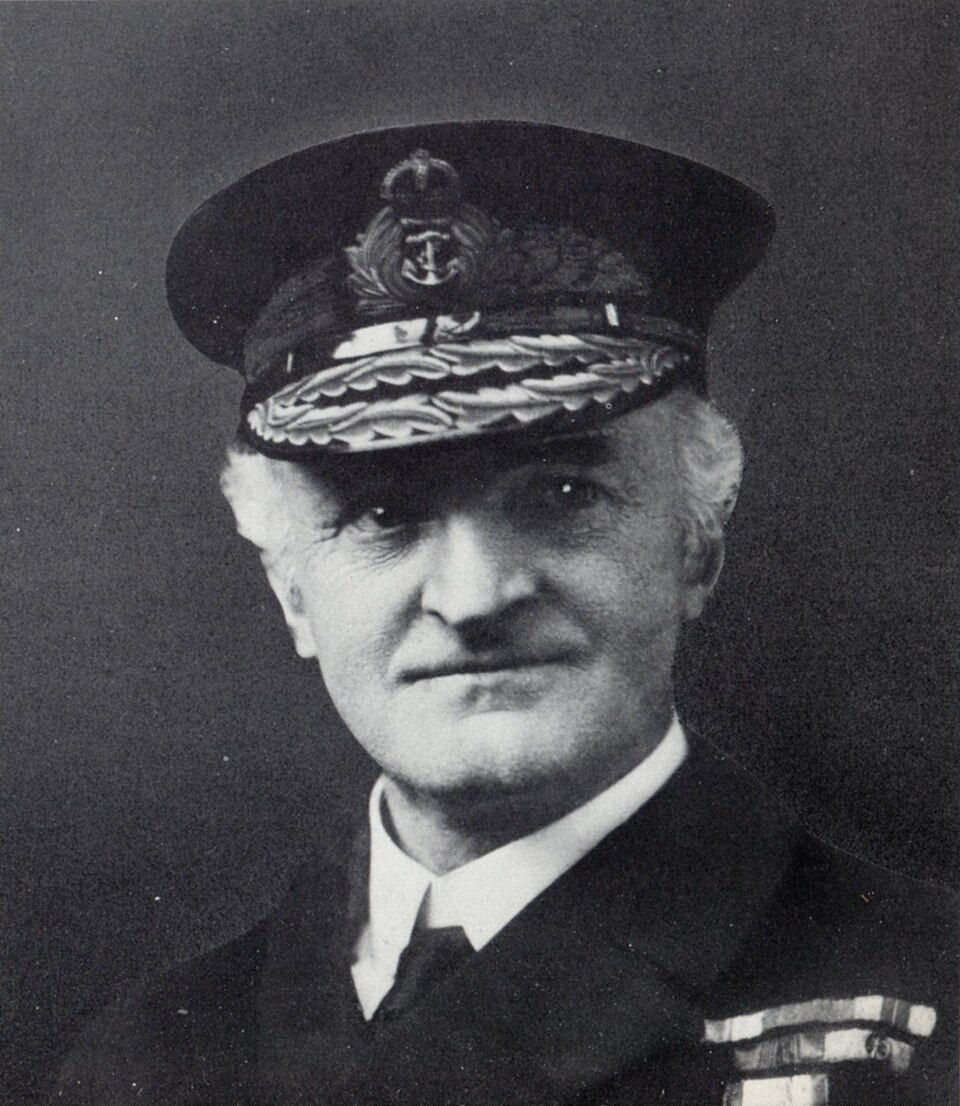
Universally known as "Blinker" Hall, he presided over the Admiralty's extraordinary Room 40 codebreaking operation. German naval and diplomatic communications could consequently find their way onto Hall's desk while their senders remained blissfully unaware that anyone else was reading them.
Hall possessed a reputation for intelligence, energy and considerable ruthlessness. Perhaps his most celebrated achievement was his handling of the Zimmermann Telegram in 1917. The problem was not simply reading the German message, but finding a way of revealing it to the Americans without revealing how British intelligence had obtained it.
There is a pleasing postscript to Hall's part in this particular history. After the war Franz von Rintelen published his memoir, The Dark Invader. The foreword was written by none other than Blinker Hall — one of the men who had spent the war trying to defeat him.
Sir Vernon Kell
Vernon Kell was the first head of the organisation which became MI5 and is already a familiar figure to readers of the Hubert and Banfield novels.
German espionage in Britain had been Kell's principal concern before the war. Once hostilities began, however, the intelligence struggle became international. German operations in the United States mattered enormously to Britain because American factories, animals, food, explosives and manufactured goods were keeping the Allied war effort supplied.
Kell therefore requires rather less introduction here than many of the other members of our cast. Readers wishing to know him better will find considerably more of him in Blackest of Lies.
Fritz Joubert Duquesne
Fritz Joubert Duquesne is another familiar face from Blackest of Lies, although "familiar" is perhaps not quite the word one would use about a man who spent much of his life changing names, identities and loyalties whenever circumstances required.
South African by birth and violently anti-British following the Boer War, Duquesne became one of the most colourful intelligence adventurers of the first half of the twentieth century.
His appearance in Sweet Sorrow therefore needs little further explanation here. Suffice it to say that if something clandestine, dangerous and anti-British was taking place somewhere in the world, Duquesne had an alarming tendency to be somewhere nearby.
A Different World
It is tempting, looking back more than a century later, to divide these people neatly into diplomats, policemen, soldiers, businessmen and spies. Their real world was considerably messier.
Shipping companies provided intelligence networks. Diplomats financed saboteurs. Policemen conducted counter-espionage. Doctors manufactured biological weapons in suburban houses. Commercial submarines crossed the Atlantic blockade. Men who would later help shape the politics of Europe were already learning their trade in hotel rooms, railway carriages, offices and dockyards across neutral America.
A different world, indeed.