
It began with one unsettling question...
When I completed Blackest of Lies, I thought I had finished telling the story of the German campaign against Britain during the First World War.
Then I stumbled across a
short article by historian Jamie Bisher. In it, he depicts the attempts
by a Swedish aristocrat, Baron Otto Carl Robert von Rosen, to rid Finland
of its Russian occupiers.

It described an extraordinary episode almost forgotten today: German attempts to introduce disease into horses and cattle destined for the Allied armies. The work centred on a brilliant but deeply disturbing scientist, Dr Anton Dilger, operating from a laboratory in America.
What struck me immediately was not simply that biological warfare had been attempted, but how modern it felt. Long before the world spoke of weapons of mass destruction, governments were already exploring ways of attacking an enemy without artillery or battleships.
That discovery raised a question.
If Germany had been willing to experiment with biological sabotage, what else had it been planning in America?
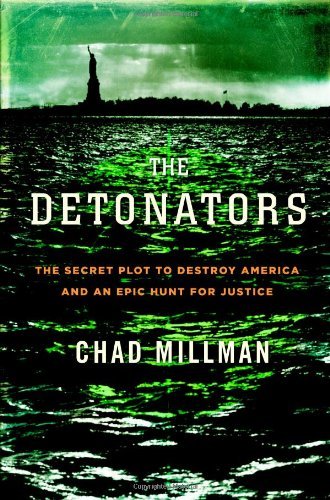
Searching for the answer led me to another remarkable book - The Detonators by Chad Millman.
Millman's account of the Black Tom explosion revealed a very different form of German sabotage. Here there were no bacteria or infected animals, but explosives, false identities and agents operating under the direction of the German Embassy in New York. It was one of the most destructive acts of wartime sabotage ever carried out in the United States. The explosion registered 5.5 on the Richter Scale and was so violent it cracked the Statue of Liberty's arm. The title image of this page shows the moment just before an MI6 agent steals the briefcase containing a list of activists from the German Commercial Attache in New York. It proved to be a vital source of information.
At first I regarded the bio-warfare and the sabotage as two unrelated subjects, entirely separate.
I planned one novel to explore Germany's clandestine biological warfare programme. The other would tell the extraordinary story of Black Tom and the campaign of industrial sabotage carried out across America.
Then something unexpected happened.
The deeper I researched, the more often the same names appeared. The same Embassy officials. The same clandestine networks. The same couriers. The same sources of funding.
What had begun as two completely unrelated investigations slowly merged into one.
History records the biological warfare programme. It records the Black Tom explosion. It records the remarkable personalities who directed both operations. What it does not tell us is how those seemingly separate events might have appeared to the intelligence officers trying to uncover them while they were still unfolding.
That was the gap I wanted Christopher Hubert and Anne Banfield to fill.
That was the moment Sweet Sorrow was born.
Sometimes history doesn't give you one story. Sometimes it quietly reveals that it has been telling the same story all along.