
Researching Blackest of Lies
Blackest of Lies began with a single historical question. It ended with years of reading, archive visits, military histories, forgotten memoirs and more notebooks than I care to remember. This page explores the research behind the novel — not simply the facts themselves, but the process of uncovering them and deciding where history should end and fiction begin.
Where It All Began
Every piece of historical research begins with a question.
Mine began almost by accident.
Between 1990 and 1993 I was serving with NATO in Oslo, Norway. Like many people with an interest in history, I became a regular visitor to the library on the base. It was a quiet refuge, well stocked with military history, where it was all too easy to lose an off-shift afternoon following one line of enquiry after another.
During one of those visits, a single book caught my attention.
Donald McCormick's The Mystery of Lord Kitchener's Death.
At first, I expected little more than another account of one of the First World War's enduring mysteries. Instead, I found a work that advanced an astonishing proposition. McCormick suggested that the loss of HMS Hampshire in June 1916 had been no accident of war, but the culmination of a German intelligence operation of remarkable audacity.
It was an extraordinary claim and it affected me all the more because, to my shame, I had no idea that Kitchener's life had ended in such a way. I had always assume that he faded away from history, perhaps in the 1920s or 30s. This was extraordinary.
Too extraordinary, perhaps.
Yet it posed an irresistible question. Could events really have unfolded quite as brazenly as McCormick suggested? Or had an intriguing historical mystery become embellished over time?
That single question sent me down a path that would occupy me for years. The search for an answer led from memoirs to official records, from archive catalogues to contemporary newspapers, and eventually beyond the question of Lord Kitchener's death itself into the shadowy and often overlooked world of World War I espionage.
Looking back, it is clear that I was no longer simply reading history.
I had begun investigating it.
Following the Trail
The first thing I did was obtain my own copy of McCormick's book. Whatever its shortcomings, it was a compelling read. More importantly, it asked questions that I had never seen raised elsewhere. Whether or not its conclusions proved correct almost became secondary. The challenge was to discover what the historical record actually revealed.
My next - and, as it turned out, final - military posting took me to the Ministry of Defence in London. It proved to be an ideal opportunity to pursue the subject further. Being in the capital placed many of the principal historical resources within easy reach, and I began where any investigator probably should: with the official record.
The Admiralty's White Paper on the loss of HMS Hampshire was exactly what I expected it to be. It presented a straightforward chronology of events. Lord Kitchener was travelling to Russia, embarked aboard HMS Iron Duke, later transferred to HMS Hampshire, and sailed from Scapa Flow. Shortly after leaving harbour, off Marwick Head on Orkney, the cruiser struck a German mine and sank with terrible loss of life. According to the official account, only twelve men survived.
It was a clear and concise narrative.
It also answered almost none of the questions that McCormick had raised.
From there I turned to Hansard, the official record of proceedings in the House of Commons. If Lord Kitchener had become a political liability before his death, Parliament would surely have left traces of the controversy.
It had.
The debates revealed considerable dissatisfaction with Kitchener's conduct of the war. At one stage, Members of Parliament even proposed reducing his salary - an established parliamentary method of expressing disapproval of a senior government minister or official. The motion failed, but it demonstrated that political opposition to him had been both real and substantial.
Then I stumbled across something entirely unexpected.
One of McCormick's more controversial claims was that there had not been twelve survivors from Hampshire, but fifteen. According to his account, three additional men - one reportedly wearing Army uniform - reached shore but were immediately taken into official custody, leaving the published total at twelve sailors.
It sounded improbable.
Yet, while reading a House of Commons debate from the 1920s concerning the continuing rumours surrounding Kitchener's death, I found an extraordinary exchange. Lord Kitchener's former deputy, Harold Tennant, was asked whether he could confirm that all fifteen survivors had received proper care after the disaster.
Tennant rose and answered that they had.
Almost immediately there was hurried consultation on the Government benches. Tennant stood again and, rather awkwardly, corrected himself.
"I meant twelve."
It may have been nothing more than an innocent slip of the tongue.
But it was enough to make me pause.
After all, the official figure had always been twelve.
So where had fifteen come from?
Defence of The Realm
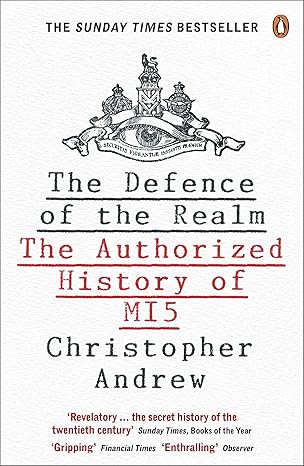
Click the image to see the book on Amazon
From there, I turned to what is widely regarded as one of the definitive accounts of Britain’s early intelligence services: Christopher Andrew’s Defence of the Realm.
It is an extraordinary work, meticulously researched and deeply authoritative, tracing the origins and development of MI5 through the first half of the twentieth century. Where McCormick had raised questions, Andrew provided context—structure, organisation, and insight into how intelligence operations were actually conducted.
For my purposes, it proved invaluable.
It allowed me to move beyond speculation and begin to understand the machinery behind it: the administrative processes, the reporting structures, and the quiet, methodical work that underpinned wartime intelligence. These were not the dramatic elements that tend to dominate popular accounts, but they were essential in grounding the narrative in something more credible.
If McCormick had opened the door, Andrew helped me see what lay behind it.
Visiting The Locations
At a certain point, reading was no longer enough.
I wanted to see the places for myself.
Broome Park
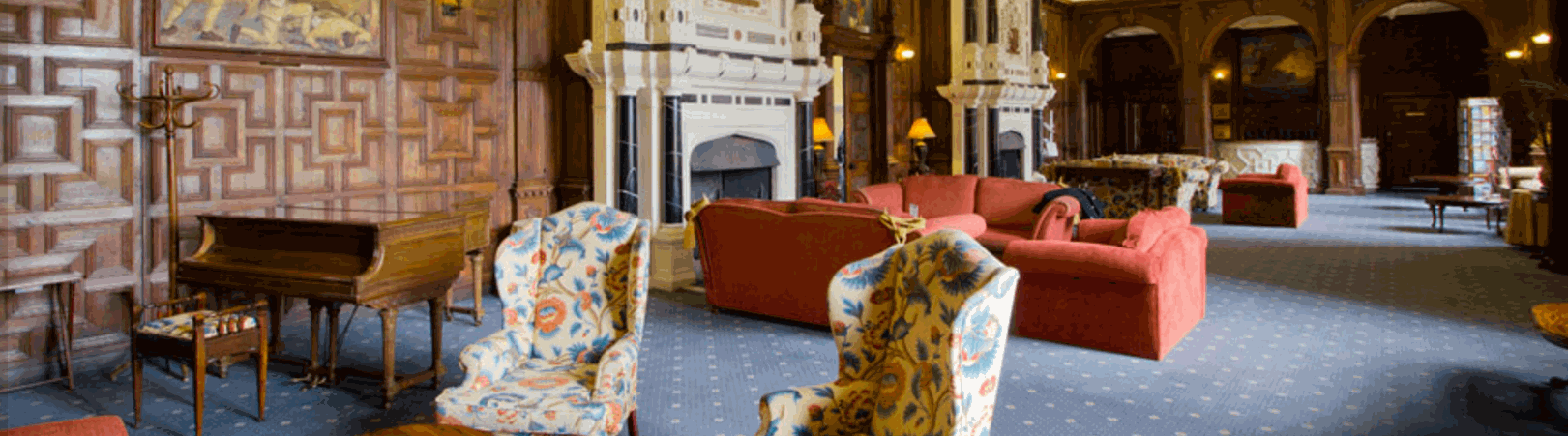
Kitchener’s home at Broome was the first of these. Today it forms part
of a large golf course, but much of the house remains intact.

She also spoke of the network of tunnels beneath the estate, many dating back to the eighteenth century. Indeed, she mentioned that another had only recently been uncovered. She had been invited to explore it, an invitation she declined without hesitation.
Standing in the main drawing room, with its vast fireplaces and heavy proportions, it was not difficult to imagine the house as it had once been. It was a place that retained its atmosphere.
Orkney
Orkney was something else entirely.
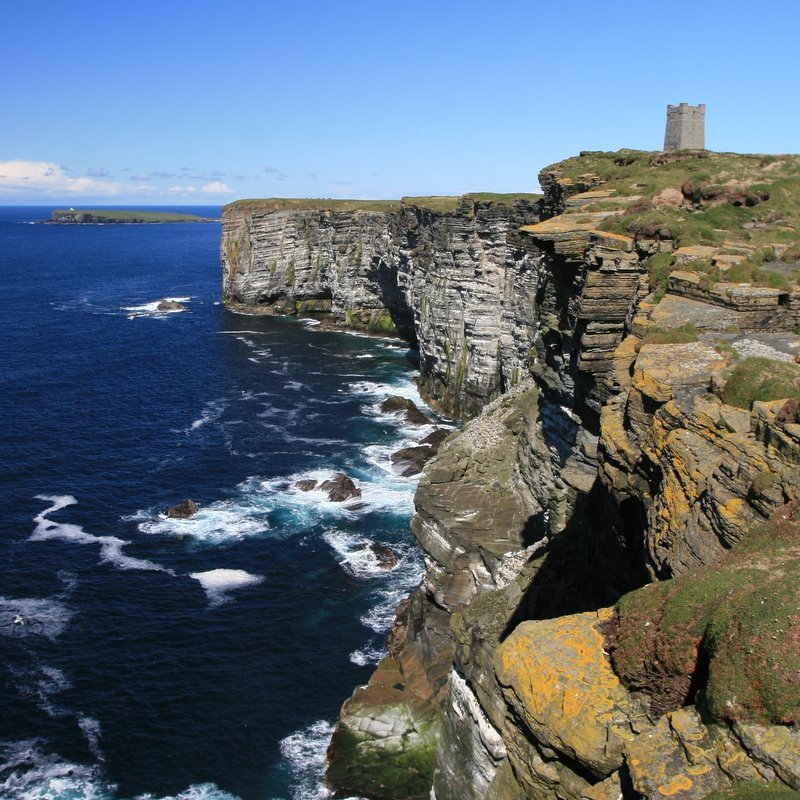
Photo by John Findlay
My wife and I travelled north to see the locations for myself, particularly the points where survivors from Hampshire had come ashore. The landscape there is unforgiving even in good weather. In a storm, it must have been almost beyond endurance.
Skaill Bay left a lasting impression. It is a small, sandy beach overlooked by a house on the rise above it. In June 1916, the occupants heard nothing during the night above the force of the storm. By morning, a number of sailors had reached the shore, only to die there from exposure, within a short distance of safety they could not see.
I also followed the route taken by those who went in search of survivors, tracing the path described in contemporary accounts. The cliffs — known locally as geos — are steep, broken and treacherous. Even in calm conditions they demand care. To attempt them in darkness, in high wind, and with exhausted men to haul to safety is difficult to comprehend.
It is one thing to read these accounts.
It is another to stand there and understand, even in part, what they must have faced.
Pilgrimage
There was one final connection I felt compelled to follow.
One of the few men who survived both the sinking of Hampshire and the war itself spent his final years on the Norfolk coast, not far from where I now live. I set out to see whether I could find his grave and, somewhat unexpectedly, succeeded.
He lies in the churchyard of a small coastal church, facing out towards the North Sea.
It is a peaceful place.
There is little to mark him out. His grave is modest, easily overlooked, and gives no indication of the ordeal he endured on that night in June 1916, nor of the fact that he was one of the very few who survived it.
Standing there, it was difficult not to reflect on the contrast between the scale of the event and the simplicity of its remembrance.
The records remain.
The debates continue.
But for those who were there, and for those who did not return, the story is carried more quietly.
Further Reading
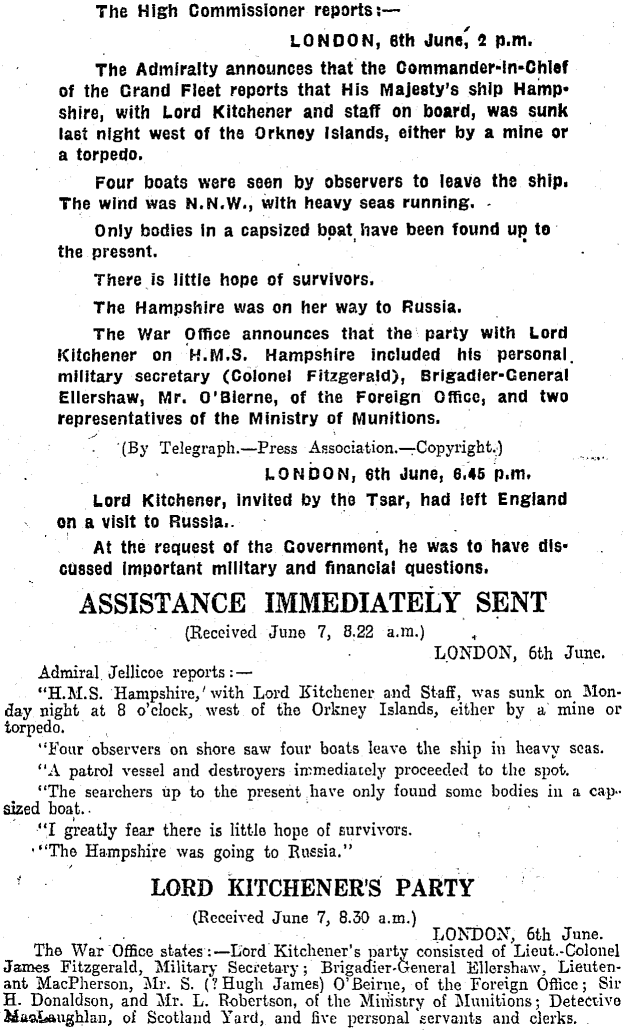
"LOSS OF HMS HAMPSHIRE" - Extract from Hansard 6 Jun 1916 Questions raised in the House concerning the sinking. The word "espionage" makes an appearance. .
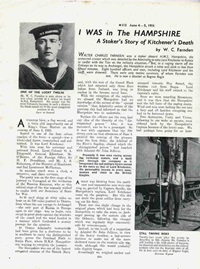
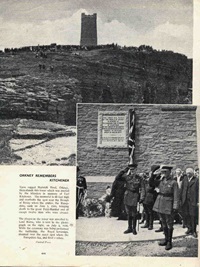
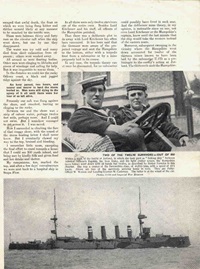
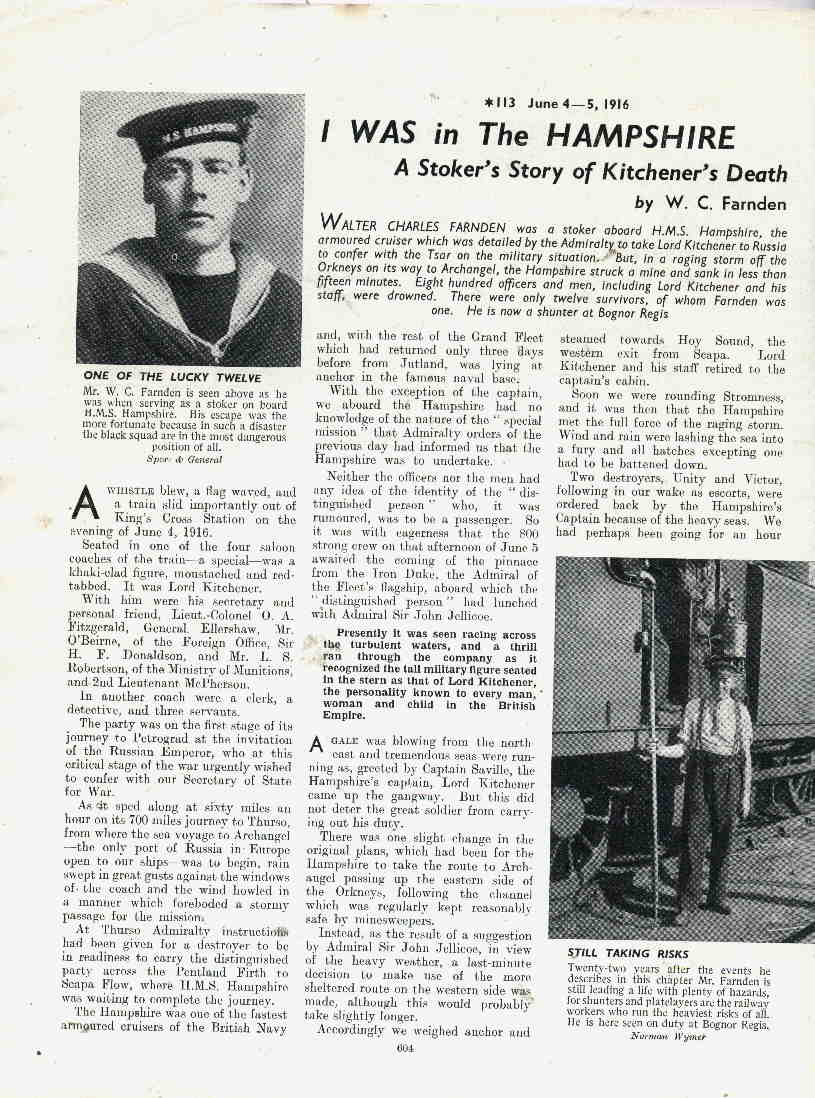
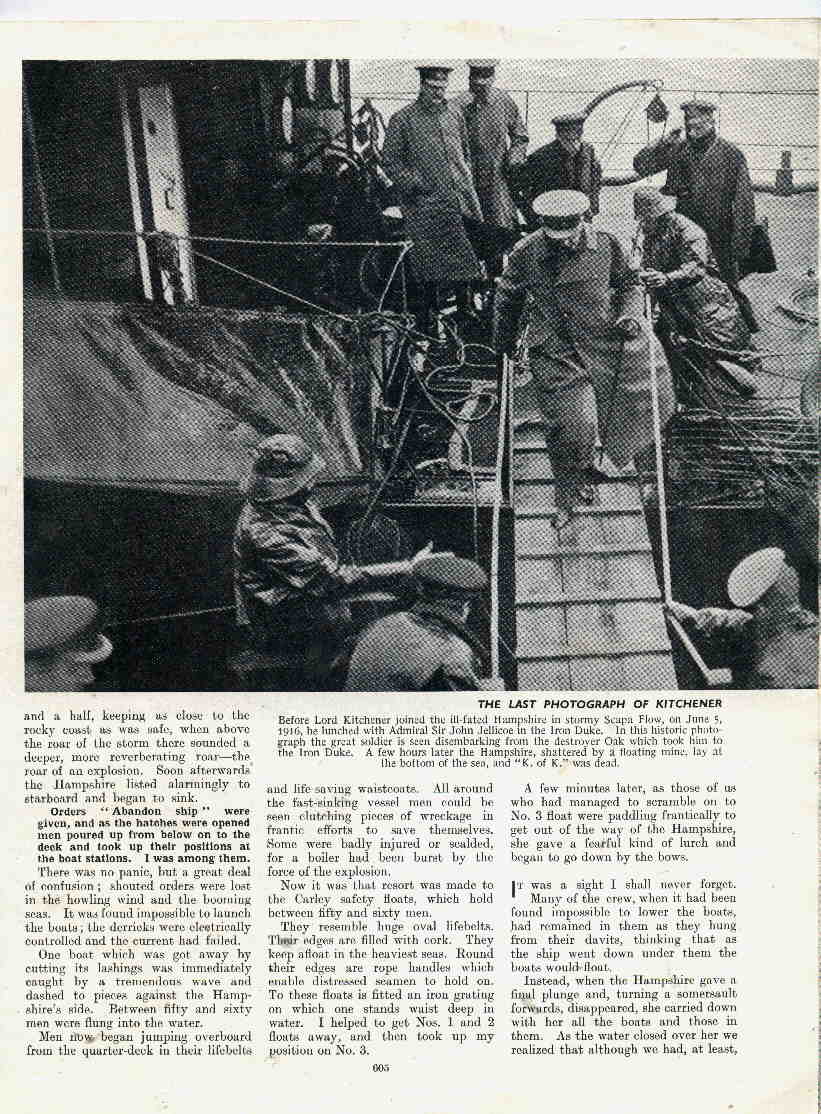
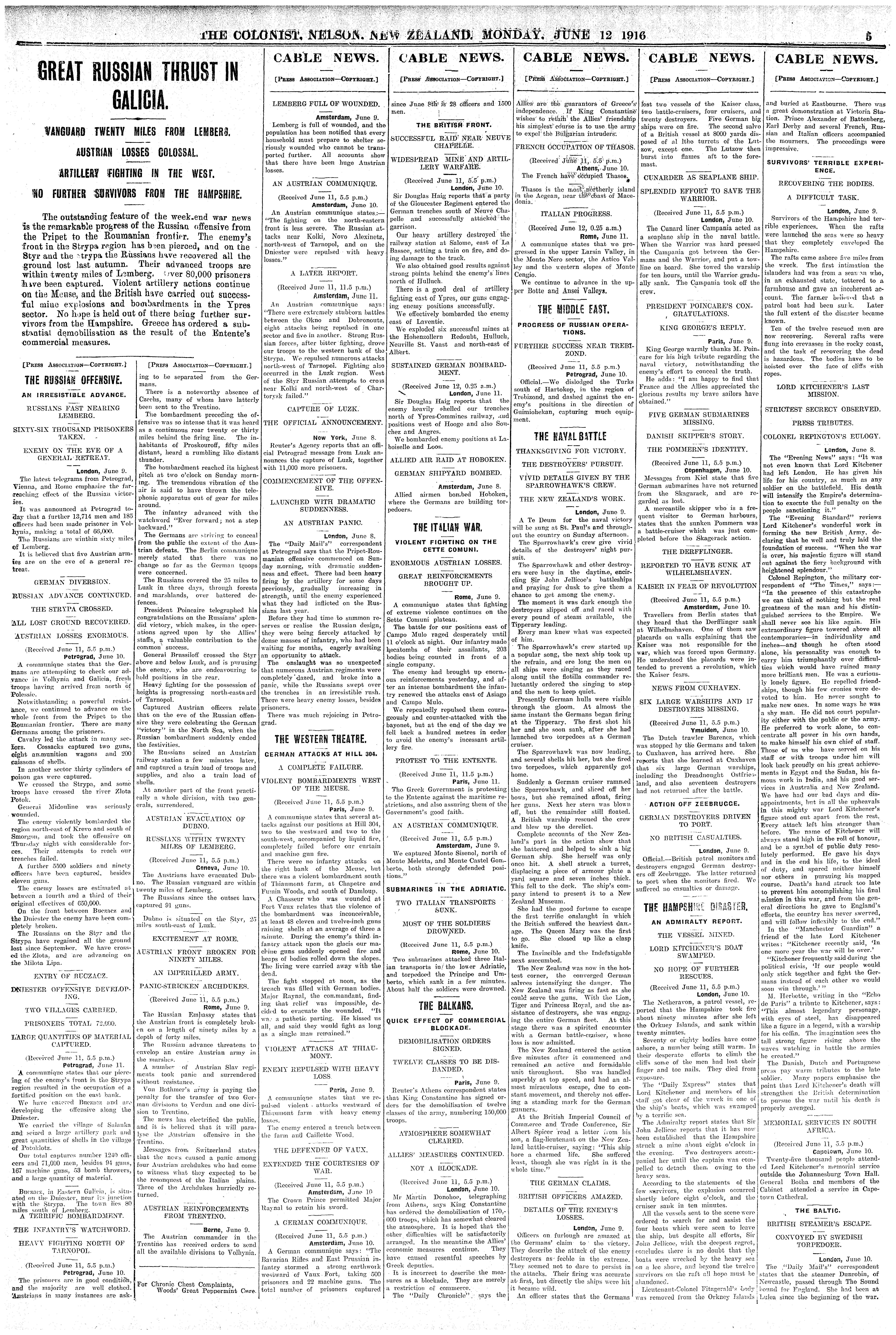
Below are some extracts from a magazine and a newspaper. Click on any of the images below to see the full text of the articles. Then just click again on any space outside the image to return to the list